sábado, 20 de diciembre de 2014

India prueba su nueva bomba planeadora de 1 Tonelada


India ha probado hoy su nueva bomba planeadora de una tonelada, capaz de alcanzar objetivos localizados a 100 km. de distancia. La bomba de precisión fue probada en la bahía de Bengala y se lanzó desde un avión de la Fuerza Aérea Hindú. Guiada por su sistema de navegación a bordo, se deslizó a lo largo de casi 100 km antes de dar en el blanco con "gran precisión", según ha informado la Organización de Investigación y Desarrollo de Defensa (Defense Research and Development Organization - DRDO). Según el Dr. G Satheesh Reddy, Director del Laboratorio Imarat, encargado del desarrollo de la bomba de planeo, "India se ha hecho autosuficiente en el área de bombas de precisión guiadas."


A diferencia de los misiles, las bombas de planeo no tienen motor a bordo y son por lo tanto mucho más baratas de construir y mantener que los misiles. Su funcionamiento se basa en pequeñas aletas de control que dirigen el arma hacia el objetivo siguiendo un rumbo marcado por el ordenador a bordo conforme a los datos proporcionados por el buscador con que cuenta esta bomba. El buscador en sí mismo puede ser óptico, de infrarrojos o una combinación de los dos. Por si esto no bastase, el ordenador puede recibir datos vía satélite para alcanzar su objetivo con máxima precisión. Gracias a su alcance de 100 kilómetros, esta nueva bomba de planeo puede ser lanzada por el ejercito de la India hacia objetivos terrestres que estén más allá del alcance de la mayoría de misiles tierra-aire disponibles actualmente por los ejércitos de China y Pakistan. En otras palabras, esto significa ni mas ni menos que podrían lanzar un ataque desde un caza y escapar antes de entrar en el radio de alcance de los misiles tierra-aire del enemigo.

David del Fresno Consultores

India prepara la tercera prueba del Agni-V


En la base militar de Odisha están llevandose a cabo los preparativos para el tercer lanzamiento del misil Agni-V, los próximos 7 u 8 de enero, en presencia del Primer Ministro. Si las pruebas resultan satisfactorias, el misil pasará a formar parte del arsenal hindú a lo largo de 2015.


Características principales:
Etapas: 3
Alcance: 5.000 Kilómetros
Munición: Nuclear. 1.360 Kg.
Dimensiones: 17 metros de longitud y 2 metros de ancho
Peso: 50 toneladas
Lanzadera: Móvil
Cabezal: MITRV (Multiple Independently Targetable Re-entry Vehícles)

David del Fresno Consultores

domingo, 14 de diciembre de 2014

La Armada China amenaza a la US Navy


De acuerdo con recientes informes, China planea ampliar su armada hasta 351 buques para el año 2020. Para algunos analistas militares, esto supondría una clara amenaza a la supremacía norteamericana en el Pacífico, de no ser porque en lo referente a portaaviones China tan sólo cuenta con uno (el Liaoning, de fabricación ucraniana) y Estados Unidos cuenta con once.


Sin embargo, existe otra amenaza latente para la supremacía militar norteamericana en la región, y su nombre es DF-21D: Un misil balístico antibuque, diseñado para alcanzar desde tierra objetivos localizados a una distancia de hasta 900 millas náuticas (1.600 Km).


Otra amenaza para la US Navy es la que representan los submarinos, ya que China cuenta actualmente con 60 unidades desplegadas en la región, mientras que la US Navy tan sólo cuenta con 32. Por si esto no bastase, China prevé contar con hasta 80 unidades en la zona para el año 2020, algunas de ellas armadas con misiles nucleares JL-2, capaces de alcanzar objetivos localizados a más de 4.500 millas náuticas (8.300 Km)

USA: 350 millones para el "Iron Dome"


A comienzos del presente mes, el vicepresidente norteamericano Joe Biden informó que desde el año 2008 la administración Obama lleva proporcionando a Israel más de 17.000 millones de dólares de ayuda para gastos militares.


La última partida se aprobó la semana pasada e incluye 350 millones de dólares para el sistema Iron Dome. Está prevista asimismo la entrega a Israel de 3.000 bombas inteligentes.

viernes, 12 de diciembre de 2014

New Russian tactical missiles


Russia is keeping pace with the U.S. in the field of long-range precision tactical weaponry, and in some areas it even has an advantage. Let us see in this post three main new missiles that will be employed by the Russian armed forces starting 2015: KH-31PM, KH-35U Uran, and 3M-55 Yakhont


KH-31PM

  • Very similar to the Moskit, but smaller and cheaper, this tactical missile is designed for destroying above-water targets, radar stations and anti-aircraft missile complexes such as the Patriot.
  • It can be installed in all types of Russian destroyers and bombers.
  • The new KH-31PM has an increased range of 160 miles, and is equipped with the broadband guidance head, which can be used against practically all anti-aircraft systems.
  • It also has a new guidance system and engine, which make its flight more unpredictable and deadlier for the adversary.


KH-35U Uran

  • Russia’s principal new tactical missile is the winged KH-35U Uran missile.
  • Its special feature is its unique self-guided head, which is immune to enemy radar interference.
  • It works in two modes: active, when the missile turns on its guiding head for a split second to find the target, and passive, when it does not scan the space around it to detect the target, but merely perceives the impulses emitted by the target.
  • The KH-35U attacks the target at the height of almost three meters above sea level - lower than the ship's deck, which makes detecting it difficult for radar stations.

3M-55 Yakhont

  • The peculiarity of these missiles is their AI (Artificial Intelligence) system, helping it function against a single ship on a "one missile-one ship" basis, or as a "flock" against a squadron of ships.
  • The missile distribute and classify the targets according to their significance, choose an attack strategy and the plan of its realization.
  • In order to exclude errors in selecting the maneuver and striking the assigned target, electronic "portraits" of all modern types of ships are installed in the anti-ship missile's onboard computing machine.
  • The machine also has purely tactical data, such as data on the type of ship squadron, which helps the missile determine what is in front of it - aviation carriers or an amphibious group - and attack the target.
  • The onboard computing machine also has data on countering the adversary's electronic combat resources, which can interfere and lead the missiles away from the target, as well as tactical techniques of evading anti-aircraft defense fire.
  • The constructors say that after being launched, the missiles decide themselves which one will attack the target and which one will only imitate the attack, distracting the adversary's anti-aircraft systems.
  • When one missile destroys the principal target in the squadron, the remaining missiles attack the other ships, excluding the possibility of striking one target with two missiles.

ICBM Modernization: Challenges and Opportunities


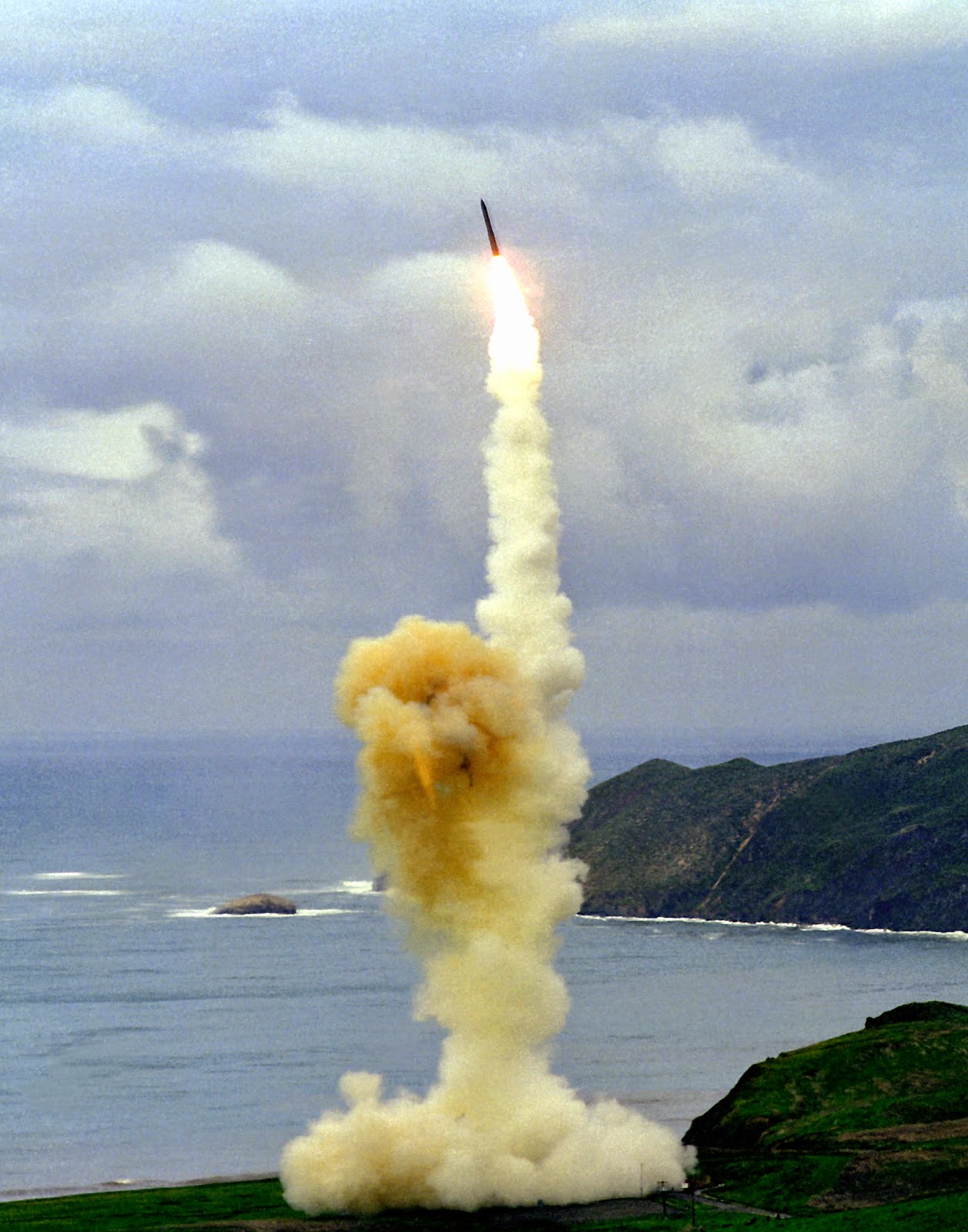
A 2014 RAND Corp. study found that sustaining the current Minuteman III force with gradual upgrades is a relatively inexpensive way to retain current ICBM (Inter Continental Ballistic Missile) capabilities. The study also found that a new ICBM system would likely cost two to three times as much as incremental modernization and sustainment of the current ICBM system.


One constraint on the lifespan of the current system is the declining quantity of missile bodies due to required annual test launches. The Air Force conducts three tests per year, and the ICBM system program office has recommended increasing that to four times annually. It means a force of 420 operational ICBMs is not sustainable beyond 2030 without new units and the entire missile asset will be depleted by 2135, RAND said.

lunes, 8 de diciembre de 2014

China, angered


China's foreign ministry rebuked the U.S. Congress after legislators passed a bill allowing the sale of second-hand warships to Taiwan, the self-ruled island which Beijing claims as a renegade province.

Foreign Ministry spokesman Hong Lei said the bill's passage was an "interference" in China's internal affairs: "China is resolutely opposed to this and has already made solemn representations to the U.S. side. We hope the U.S. Congress stops carrying forward this legislation," Hong told reporters at a regular press briefing. "We also hope the newly elected authorities can prevent the implementation of this legislation to avoid influencing the development of China-U.S. relations," Added.


The bill, which includes provisions on the transfer of warships to Mexico, Thailand and Pakistan, still has to be signed into law by U.S. President Barack ObamaThe U.S. Senate unanimously approved the bill last week, authorizing the sale of four Perry-class guided missile frigates to Taiwan. China expressed anger in April when a similar bill passed in the U.S. House of RepresentativesU.S. weapons sales in recent years to Taiwan have attracted strong condemnation in China, but have not caused lasting damage to Beijing's relations with either Washington or Taipei.

While Taiwan and China have signed a series of landmark trade and economic agreements since 2008, political and military suspicions are still deep, especially in democratic Taiwan where many fear China's true intentions.

Russia Develops Own THAAD-like


A Russian system similar to the Terminal High Altitude Area Defense (THAAD) system, designed to intercept and destroy ballistic missiles inside or outside the atmosphere during their final phase of flight, will begin trials soon. Russia has also been creating a system similar to another element of US missile shield, the GMD (Ground-based Midcourse Defense) capable to engage and destroy limited intermediate-and long-range ballistic missile threats in space. Unlike the GMD, the Russian counterpart will be mobile.

viernes, 5 de diciembre de 2014

Russia’s Navy to be Fully Modernized


Russia has started the implementation of its military shipbuilding program, and aims to fully modernize its Navy, supplying it with over 600 surface ships, submarines and other auxiliary ships by 2050. Also, Russia’s Defense Ministry has already approved the technical design specifications for its Leader class destroyers. The destroyer’s nuclear-powered and gas turbine propulsion power plant will be manufactured in Russia and will allow the ships to travel at 30 knots.


The key developer of the next-generation warships is Krylov State Research Center in St. PetersburgThe next-generation warships will be equipped with Caliber cruise missiles and a S-500 Prometey antiaircraft defense system. The warships will be capable of combatting submarines and will also be equipped with two special helicopters and a modern sonar system.

jueves, 4 de diciembre de 2014

Europe, the old chessboard


Further deployment of America’s global anti-ballistic missile defense poses a threat to the US and those European countries that agreed to host it, because it builds up a dangerous illusion of invincibility, Putin said in the state of the nation address.


The European Phased Adaptive Approach, centerpiece of the US missile defense shield in Europe, implies deployment of Arleigh Burke-class guided-missile destroyers, all of which are fitted with the Aegis weapon and radar system, interceptor batteries in Poland and Romania, radar in Turkey, and a command center at Ramstein, Germany, a US Air Force base. 


“This constitutes a threat not only to the security of Russia, but to the whole world, in view of the possible destabilization of the strategic balance of powers. I believe this is dangerous for the US itself, as it creates a dangerous illusion of invulnerability and reinforces the tendency of unilateral, often ill-considered decisions and additional risks,” Putin said.